RSS

Blog posts tagged with 'steelhead tips'

Sink-tips for Winter Steelhead

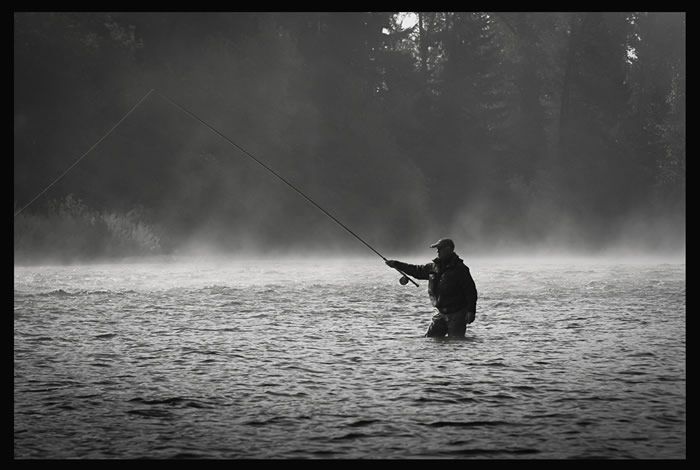
Winter Steelhead Sink Tips
Photo by Tom Larimer

Sink-tips for Winter Steelhead

By: Tom Larimer

One of the big challenges of winter steelheading is how quickly the water conditions and the attitude of the fish change. As an angler, you need to adjust your sink-tips accordingly. Given the fact that you get so little positive feedback as a winter steelheader, this is the most demanding aspect of the game. However, there are a few elements that can help you form an educated guess of what sink-tip to fish. 

The biggest factor in sink-tip selection is the trend of the water flows. If the river is dropping right after a big winter storm, you can assume you’ll be fishing over fresh, aggressive fish. More times than not, the water will be high and have some stain to it in these conditions. In this situation the fish will hold in surprisingly skinny water, sometimes less than 2’, and very close to the bank. A long, heavy sink-tip will actually fish under the fish. Not to mention you’ll loose a ton of flies. This is the time to wade shallow, cast short and fish a light sink-tip. Also keep in mind that new fish are more willing to chase a fly swimming higher in the water column. -This is not the time to dredge the bottom! A great choice of sink-tip would be a 7.5’ MOW Tip in T-14 or a 10’ section of T-7 or T-10. 

A couple of days after a storm, as the water drops and begins to clear, the migration of the fish will slow down. Consequently their willingness to hold in shallow water and their aggressiveness will change. You’ll want to fish more “tradition” 3’ to 5’ deep holding water in this situation. During this time the fish will still be fairly active but you’re going to need to get the fly deeper with mending and bigger sink-tips. A logical choice of sink-tip would be 12’ to 13’ of T-14 or T-10 during these circumstances.
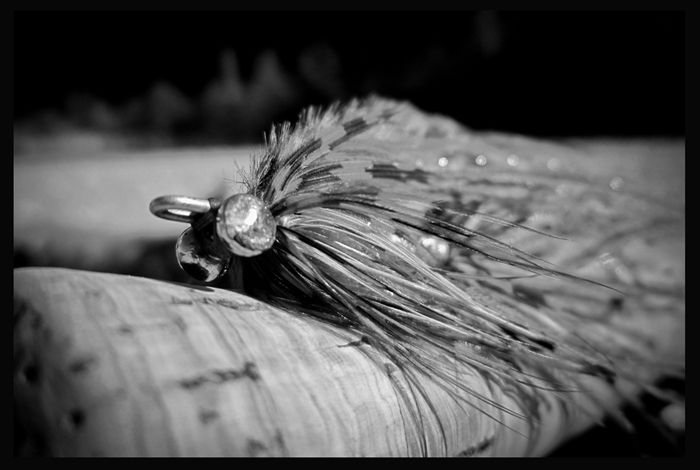
Sink Tips - Winter Steelhead fly
Photo by Tom Larimer

One of the hardest times to catch winter steelhead is those periods during the winter when our rivers get low, clear and cold and we haven’t had a bump in the water level for a week or two. In these situations, there is little to no migration of existing fish in the system and new fish are hard to come by. The longer a steelhead sits in a river without migrating, the less aggressive it becomes. Usually they are very reluctant to move either laterally or vertically to intercept a fly. Plus, the fish will more than likely gravitate towards deeper holding water. This is especially true if the sun is out. This is the time to wade deep, fish your biggest sink-tips and blaze some big casts. You need to hit them on the nose so don’t be afraid to mend the fly hard and make your steps during the swing. -A wise angler fishes their fly deep and slow during the doldrums of winter. Make sure to layer up on your legs and feet because you’re going to wade deep! Although finding winter steelhead in low, clear, cold water is tough, your chances will go up if you have the right sink-tips. Make sure you’re carrying 12’ to 15’ of T-14 and T-18 for the low water times of the season. Sometimes getting the fly right in their face is the difference between casting practice and winter steelhead bliss. 

If you’re ever in doubt of what sink-tip to fish or where to fish it, make one pass through a run wading shallow with a light tip. Make your casts short and concise and cover the shallow water near the bank. Then, make a second pass wading deeper with a heavier sink-tip. This is easy to do if you’re fishing with a partner. 
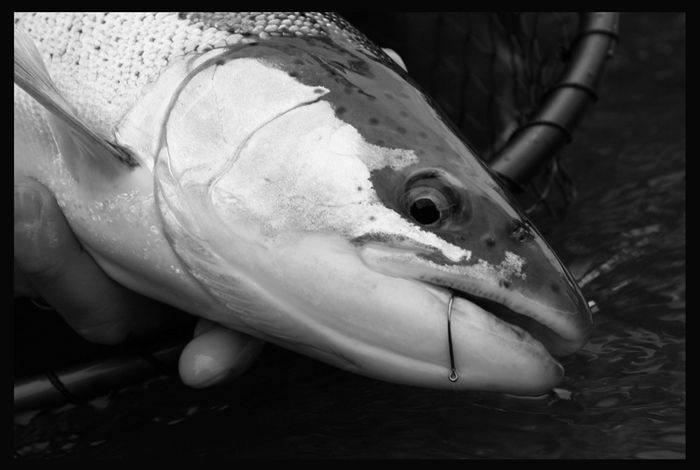
Sink Tips Winter Steelhead
Photo by Tom Larimer


Finally, always remember that if you’re loosing flies on every cast, you’re not fishing effectively. Steelhead don’t tip down to eat flies like a bonefish does. While the toughest conditions do necessitate getting the fly deep, most of the time active steelhead will be suspended 10” to 15”off the bottom. If the water you’re fishing is four feet deep and the fish is suspended a foot off the bottom, a fly swimming two and a half feet below the surface is right in their dinning room. One thing is for sure; you can’t catch a fish if you’re constantly tying on a new fly. 

The next time you hit your favorite winter water, be observant of the situation, form a game plan, and take the time to change sink-tips accordingly. Make adjustments for each run you fish, the given conditions of the day and the attitude of the fish and you will find reward this winter. 

Hook'n Steelhead: Loop or Not to Loop?

Spey ClassSo, you’re fishing well. Your sleek, tempting steelhead fly is dancing through the river, and you can’t help but think that the bite is coming any second, but are you truly prepared for that moment? When the fish finally takes, will you hook it, or will the fish slip away into the river’s depths?

If you’ve spent time swinging flies for steelhead, you’ve likely heard the advice: Don’t set the hook right away. It’s not like dry fly fishing for trout. And that’s absolutely true. Historically, the best hookup success comes when you allow the fish to take the fly, turn with it, and only then apply pressure to the line. Letting the fish turn gives the hook a better chance of catching in the fleshy corner of its mouth. The angle at which the fish moves, away from the line, helps the hook seat more securely. I often tell my clients to think of it like a steak dinner—let the fish “chew” on it for a bit.

But how exactly do you do this? How do you ensure you give the fish enough time to run with the fly before setting the hook? There are several ways to approach this, and not every steelhead angler agrees on the best method. In fact, many will simply say, "Do what works best for you," and I completely agree with that sentiment. Here are some strategies to consider:

1. Carry a Loop

After casting and making your initial mend, but before the fly starts swinging across the current, pull some line back through the rod tip and pinch it with your finger against the cork or the rod butt. This creates a loop of slack, with the line hanging from the reel and then up to your finger. The length of this loop determines how much line the fish can take before it hits the reel’s tension. A typical loop length for dry line fishing is between 2-3 feet, though this varies based on the water conditions. In faster water or ideal temperatures, you might lengthen the loop, while in deeper or colder water, you might shorten it. Some anglers fishing with sink tips prefer a very small loop, or none at all.

It's important not to pinch the line too tightly. You want just enough tension so the fish can take the line easily. The idea is to "feed" the fish—give them some slack. Once the fish takes the fly and turns, the loop is gone, and the tension on the reel will begin to build. That’s your signal to set the hook. If the take is aggressive, a gentle lift of the rod (at a 45-80 degree angle from the river surface) toward your shoreline is all it takes. For a more subtle take, you may need a bit more force to seat the hook. Remember, if the fish is moving away from you, setting too hard could break off the fly or pull the hook free.

2. Fish with a High Rod Tip

The idea behind this method is to let the line slack, or sag, from the rod tip to the water, giving the fish more give when it grabs the fly. However, if you lower your rod tip too early, you add more slack, which can decrease sensitivity. Some anglers prefer this method, but I’ve found a few issues with it. First, lowering the rod tip can reduce the tension on the line during the presentation, making it harder to detect subtle takes. Secondly, it takes away some control over the fly’s movement. I prefer gradually lowering my rod tip as the swing progresses, using the current to help steer the fly toward shore. At times, a downstream belly in the drift will ensure the fly finishes strong on the inside. By the end of the swing, my rod tip is typically near the water, with deep tension in the line leading to the reel.

3. Fish a Light Drag

In this approach, you fish the line tight to the reel with no loop, allowing you to control the rod tip at any height you choose. The key is setting a light drag on your reel—just enough to allow the line to run freely when the fish takes. It should not be so tight that it resists the fish, but not so loose that the line spools out uncontrollably. Finding the right drag tension may take a bit of experimentation, but the goal is to allow the line to peel off the reel when the fish grabs the fly. This is especially useful for those fish that lazily follow and sip the fly, as the line needs to run smoothly behind the hook.

Once the fish has taken the fly and turned with it, let the line run off the reel for a moment before tightening up. A good rule of thumb is to count “One thousand one, one thousand two...” or say, “God save the queen” before you start to apply tension. This gives the fish time to move and secure the hook. Once you feel steady pressure while the line is still slipping through your fingers, you can begin to apply more force to set the hook. The timing varies depending on the take. Some fish hit hard and fast, while others are more subtle. The key is to give the fish time and gradually apply pressure when you feel solid tension.

Which Technique is Best?

Ultimately, it all comes down to personal preference. I used to rely heavily on the loop technique, but in recent years, I’ve gravitated toward fishing tight to the reel with a light drag. I particularly like the steady, reliable click-pawl drag design for steelhead fishing, as it offers a consistent, light drag setting. If you have a disc-drag reel that holds up at light settings, that will work fine too.

I prefer fishing tight to the reel because I find that the loop method creates too much slack after the fish makes contact with the fly. There’s too much room for the fish to spit the hook or move in ways that loosen the connection. With the line tight to the reel, I get better sensitivity and can detect subtle takes more easily. I also think this helps avoid losing fish that are barely interested, but not quite hooked yet.

However, fishing with a light drag means you need to manage the reel during the fight—either by using your palm or fingers to slow down the spool, or by tightening the drag as needed. If you’d rather not fiddle with the drag mid-fight, the loop technique or high rod tip method might be a better fit for you.

In the end, all of these techniques can be effective. It’s up to you to experiment and find what works best for your style. For many anglers new to steelheading, fishing directly to the reel is often the simplest approach, offering fewer variables to consider when the fish first strikes.

- SHB